Choosing the right floor joist system can have a big impact on cost, build speed, and flexibility later in the project. Two of the most common options are traditional timber joists and engineered Posi Joists – and while both do the same fundamental job of supporting a floor, the way they’re built, and the benefits they offer, are quite different.
What’s the difference?
Traditional timber joists are solid sections of structural timber, typically installed at set spans depending on the load and the size of timber used. They’re a familiar, well-understood product that’s been used in construction for generations, and for smaller or more straightforward floors they remain a perfectly practical choice.
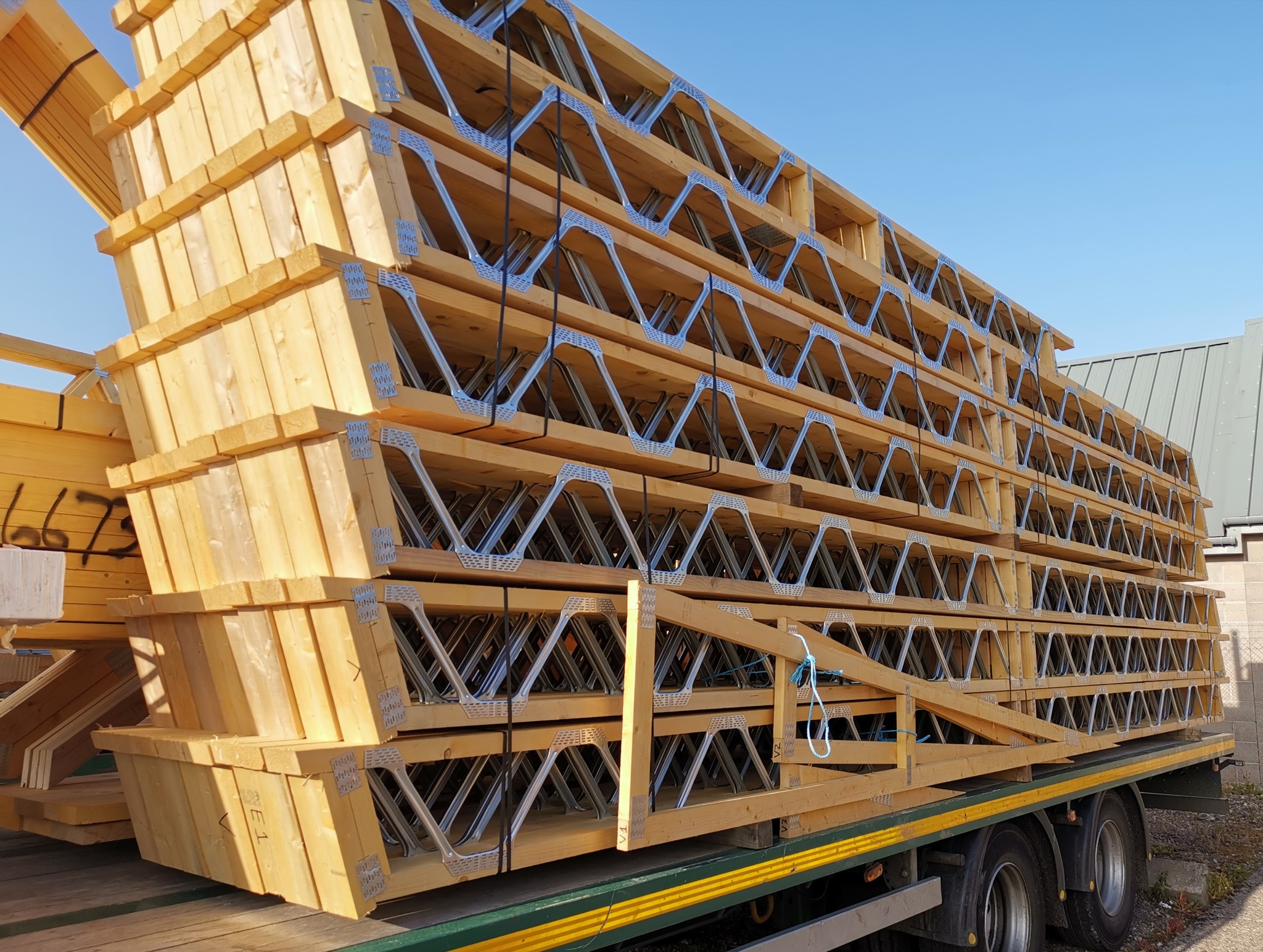
Posi Joists are an engineered alternative, built using timber top and bottom chords connected by a metal web system. This construction method allows them to be lighter than an equivalent solid timber joist while often achieving greater clear spans – meaning fewer intermediate supports are needed across a floor area.
Key advantages of Posi Joists
One of the most practical benefits is service integration. The open web design allows electricians, plumbers, and HVAC installers to run pipework, cabling, and ductwork directly through the joist zone, rather than drilling or notching through solid timber – this can simplify first-fix work considerably and reduce on-site delays.
Posi Joists are also typically lighter to handle on site than an equivalent-strength timber joist, which can make installation quicker and reduce manual handling requirements for the site team. Because they’re manufactured off-site to an exact design, they also tend to arrive ready to install with less on-site cutting and adjustment.
When traditional timber joists still make sense
For smaller spans, simpler floor layouts, or projects where budget is the primary driver, traditional timber joists can still be the right call – particularly on straightforward domestic projects where the extra span capability or service routing benefits of a Posi Joist aren’t needed.
Which should you choose?
The right answer really depends on the specifics of your project: the spans involved, whether services need to run through the floor zone, your programme, and your budget. That’s exactly the kind of thing our team talks through with builders and self-builders every day – and because we manufacture both traditional trusses and Posi Joists at our own facility in Forfar, we’re not trying to steer you toward one product over another. We’ll recommend whichever is genuinely the better fit for your project.
If you’re weighing up your options, get in touch for a free, no-obligation quote – we can often turn around advice and pricing the same day.